
Fabric Inserts Explained: When (and When Not) to Use Them
- February 9th, 2026
- Uncategorized
Fabric Inserts Explained: When (and When Not) to Use Them
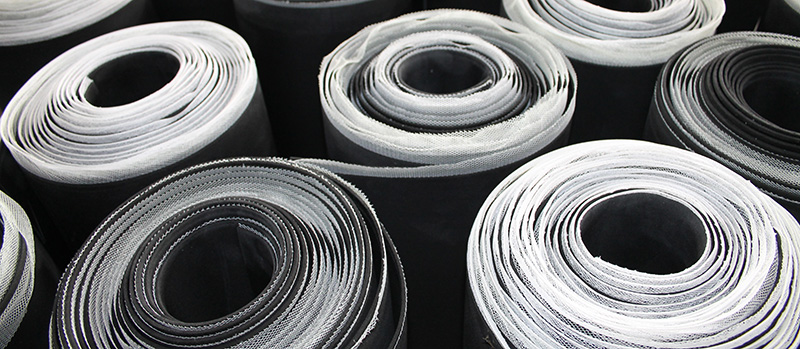
Fabric-inserted rubber is one of those materials that sounds straightforward, until it isn’t.
Should you use cotton, polyester, or nylon?
One ply or multiple?
And do you even need a fabric insert in the first place?
Let’s break it down.
What Is a Fabric Insert, Anyway?
Fabric-inserted sheet rubber is exactly what it sounds like: layers of fabric embedded within rubber to add strength, stability, and tear resistance.
The fabric helps the rubber:
- Resist stretching
- Handle higher pressures
- Maintain shape under load
You’ll commonly see fabric inserts used in gaskets, flanges, and mechanical sealing applications where plain rubber just isn’t enough.
When Fabric Inserts Make Sense
Fabric inserts are a smart choice when your application needs:
- Dimensional stability under pressure
- Improved tear resistance
- Reduced elongation
- More consistent performance over time
If your gasket sees bolting force, internal pressure, or frequent handling, fabric reinforcement can dramatically improve performance and service life.
Common Fabric Types (and Why They Matter)
Not all fabrics behave the same once they’re inside rubber:
- Cotton – Flexible, economical, and easy to cut
- Polyester – Stronger, more durable, and moisture-resistant
- Nylon – High strength and excellent tear resistance
Choosing the right fabric depends on how much reinforcement you need, and how the material will be fabricated.
When Fabric Inserts Don’t Help
More reinforcement isn’t always better.
Fabric inserts may not be ideal if you need:
- High elasticity or stretch
- Soft compression sealing
- Tight-radius die cutting
- Maximum surface conformity
In some cases, a fabric insert can actually reduce sealing performance by limiting the rubber’s ability to compress and recover.
It’s Not Just Fabric – It’s Placement and Ply Count
Single-ply vs. multi-ply.
Surface placement vs. centered inserts.
These details matter more than most people realize. The wrong configuration can make a material harder to cut, harder to seal, or harder to install.
That’s why fabric inserts shouldn’t be treated as an add-on, they should be specified intentionally.
How Premlene Helps Get It Right
Premlene offers fabric-inserted sheet rubber in a wide range of:
- Compounds
- Fabric types
- Ply counts
- Thicknesses and roll sizes
More importantly, our team helps customers determine whether a fabric insert actually adds value, or if a solid sheet rubber option will perform better.
Not sure if your application needs a fabric insert?
Let’s figure it out together.
Contact Premlene to talk through your application